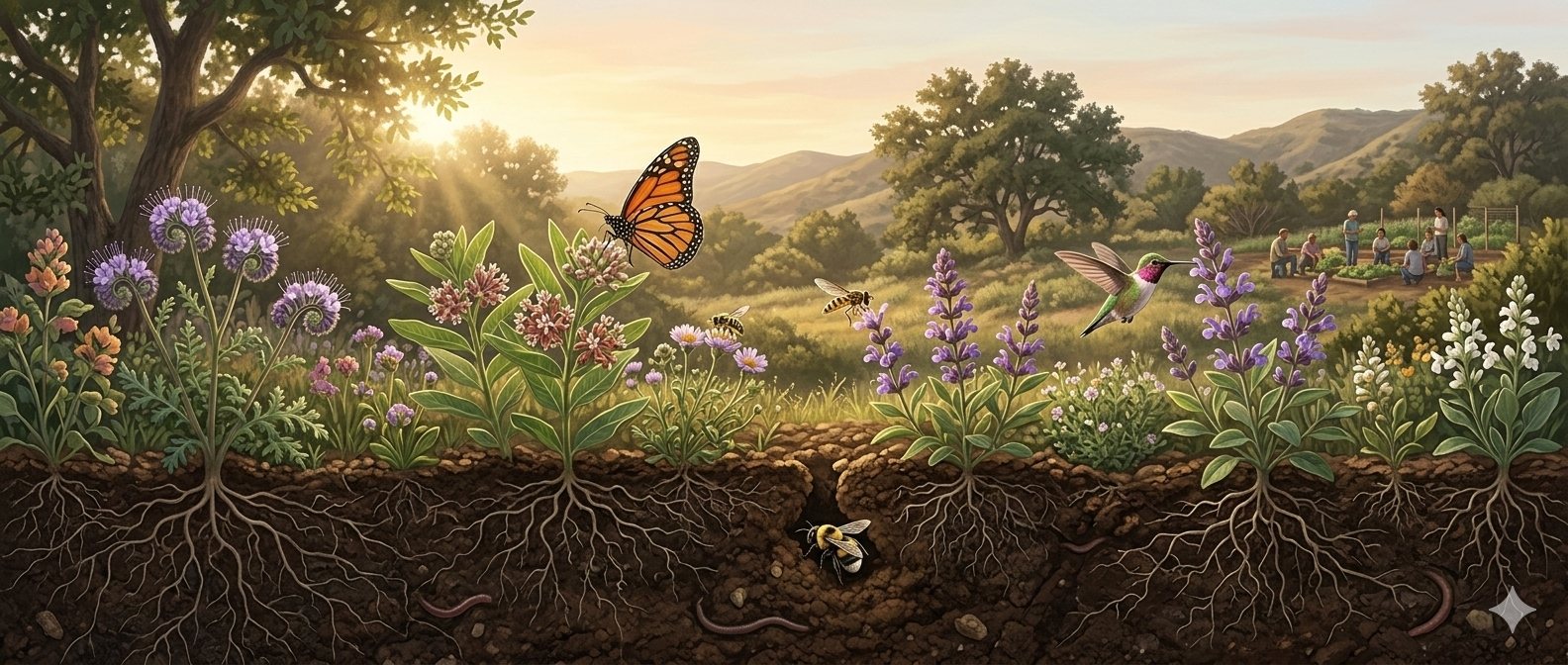
Wings of Change invites the community to a free Fallbrook pollinator event on Saturday, April 11, 2026. This Spring Quarterly Gathering will explore how soil health, native plants, and early-season pollinators work together to create fire-wise and water-wise habitat in Southern California.
What to Expect at the Fallbrook pollinator event
- Community Resources Partner Introductions:
- A short educational presentation on early-season pollinators
- Community screening of Kiss the Ground
- Native seed giveaways
- Habitat tips for fire-wise and water-wise gardening
- Local resources for creating pollinator habitat
This event is made possible through support from partners including Fallbrook Woman’s Club, Metropolitan Water District of Southern California and the Angel Society of Fallbrook.
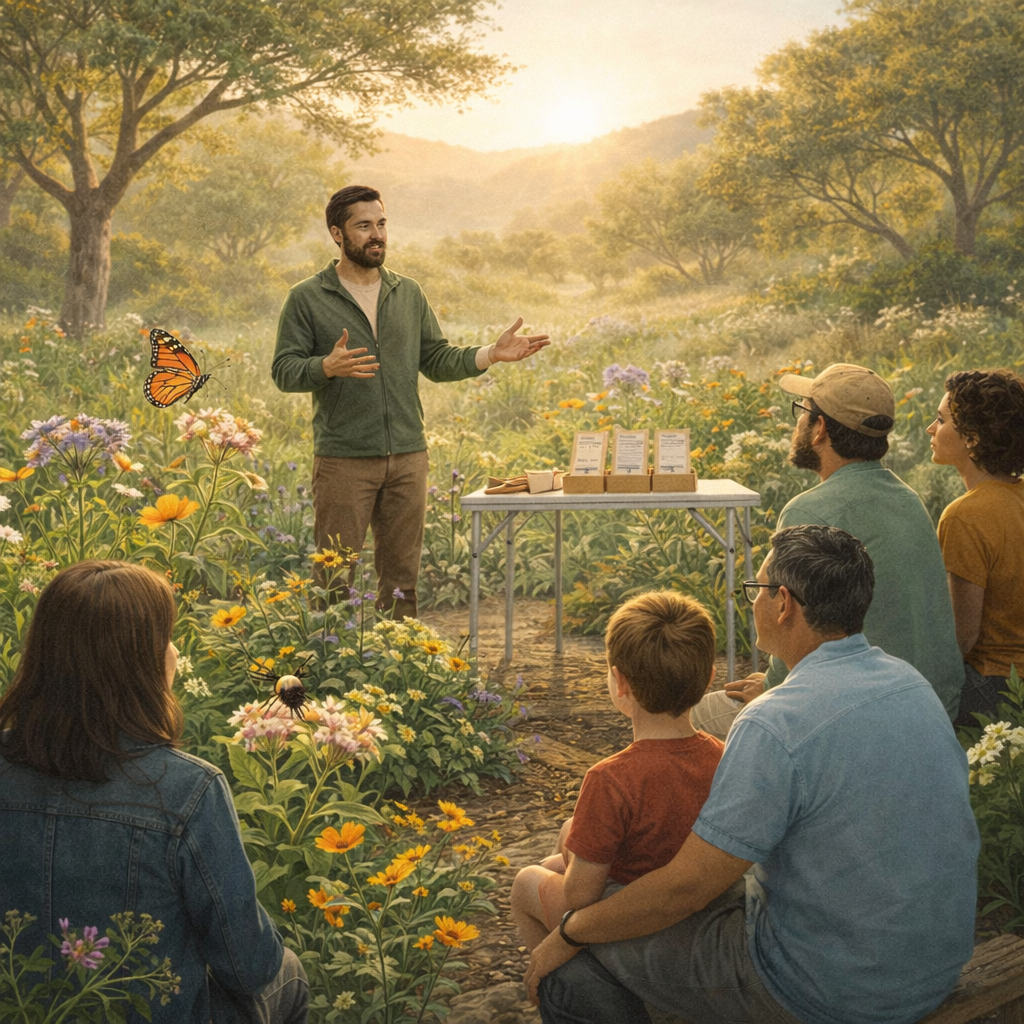
The event will take place at the Fallbrook Woman’s Club from 11:00 AM to 1:11 PM and will include a short educational presentation, a community film screening, and native seed giveaways. This Fallbrook pollinator event is part of Wings of Change’s mission to restore native pollinator habitat throughout North San Diego County.
Whether you are a gardener, homeowner, student, or simply curious about pollinators, this gathering will offer practical steps you can take to help restore habitat in your own yard and community.
Pollinator Habitat and Soil Health in Fallbrook
Southern California’s pollinators rely on healthy soil and diverse native plants to survive seasonal changes, drought conditions, and habitat loss.
At the center of this story is the queen bumble bee. Each winter she emerges from the soil and must quickly find nectar to regain strength and establish a new colony. Without early blooms and undisturbed ground, those colonies never begin.
This event highlights the first four species in the Wings of Change Pollinator of the Month series and the native plants that support them.
Read more about the Angel Society in our local newspaper, the Village News.
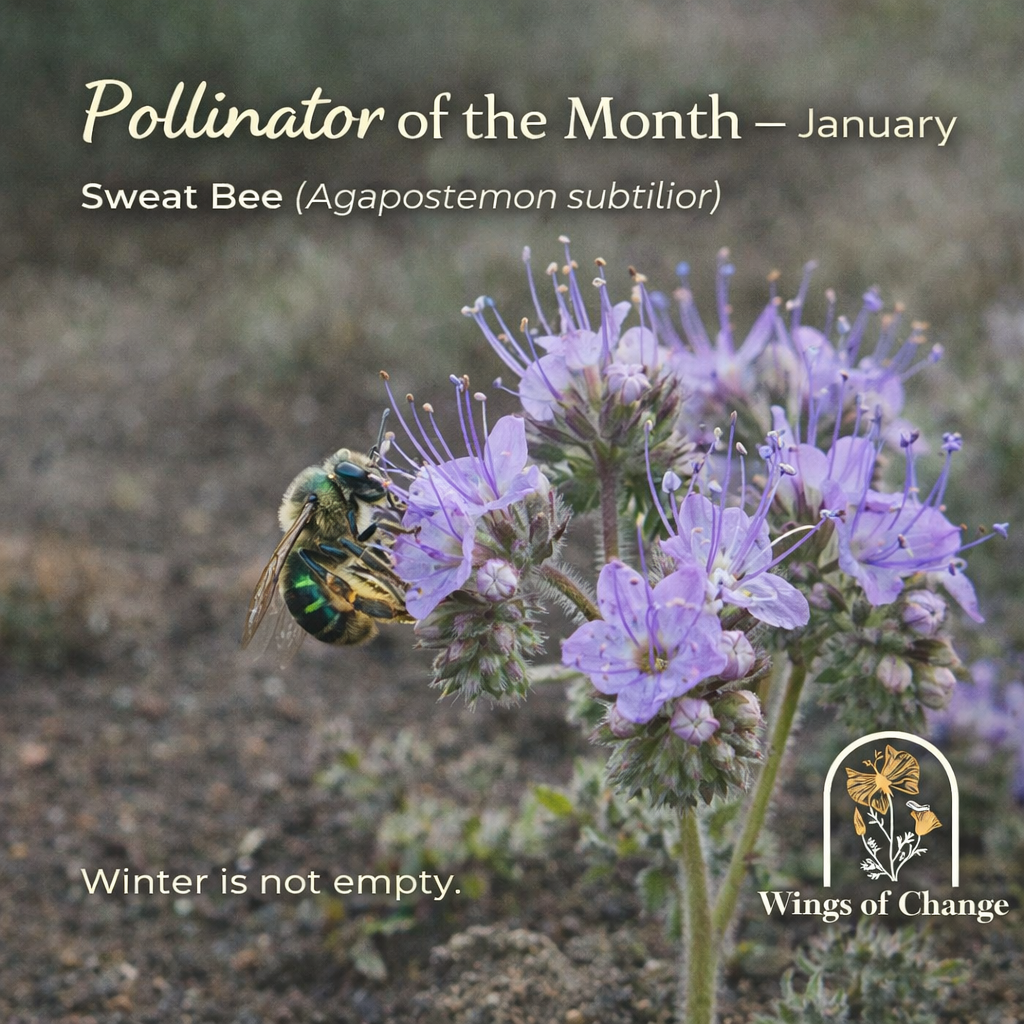
January Pollinator of the Month: Metallic Green Sweat Bee
Even in the quiet of winter, pollinators are hard at work. The metallic green sweat bee emerges on warm days, visiting early native blooms and helping kickstart the pollination season. In this Pollinator of the Month blog, discover how winter flowers like lacy phacelia provide critical nectar and pollen for native bees—and how planting these early bloomers can support pollinators in your own garden.
Read the full story and learn how small habitat changes can make a big difference on our blog.
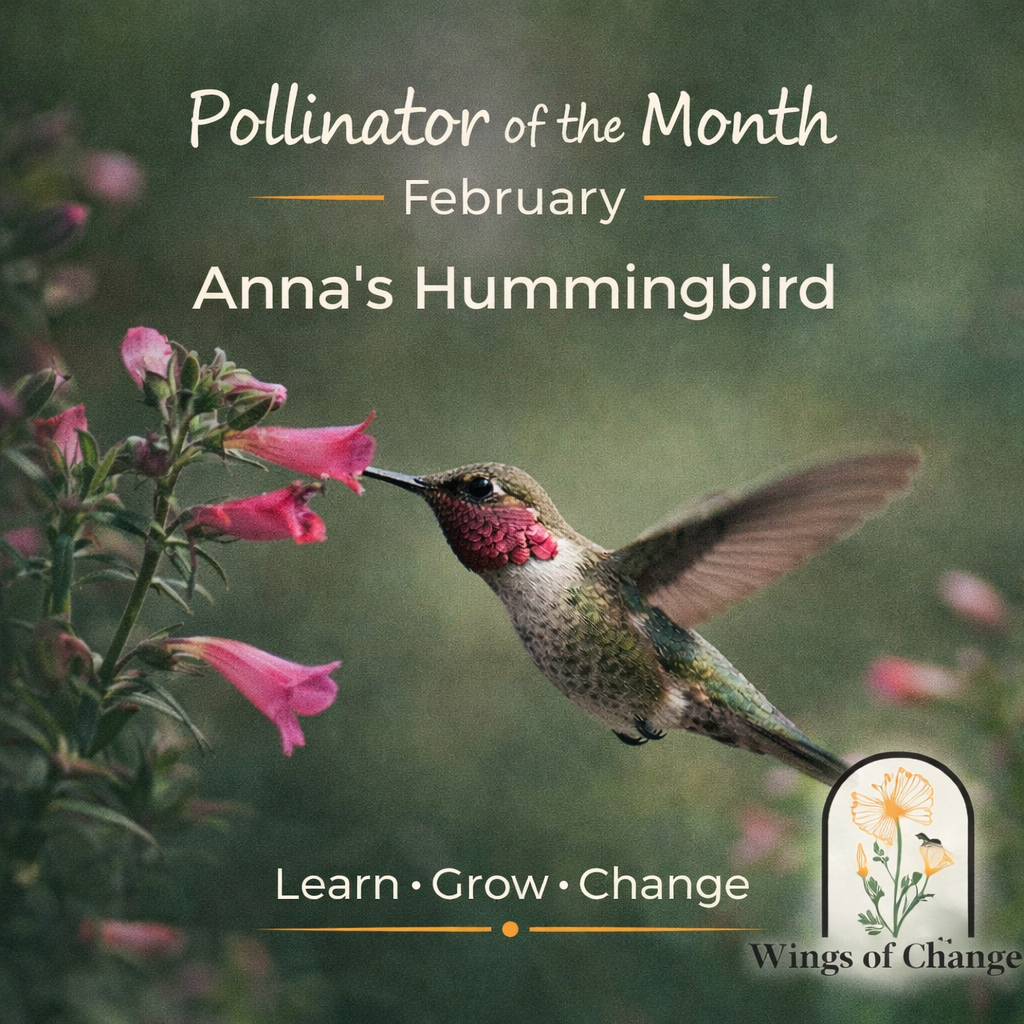
February Pollinator: Anna’s Hummingbird
The vibrant Anna’s hummingbird is a year-round resident in Southern California.
Early native plants such as white sage provide nectar during late winter when few flowers are available. These blooms support both hummingbirds and native bees while forming the backbone of water-wise pollinator gardens.
Avoiding winter cleanup allows overwintering pollinators to remain protected in stems and leaf litter.
Learn all about Anna’s Hummingbird, our pollinator of the month in February on our blog.
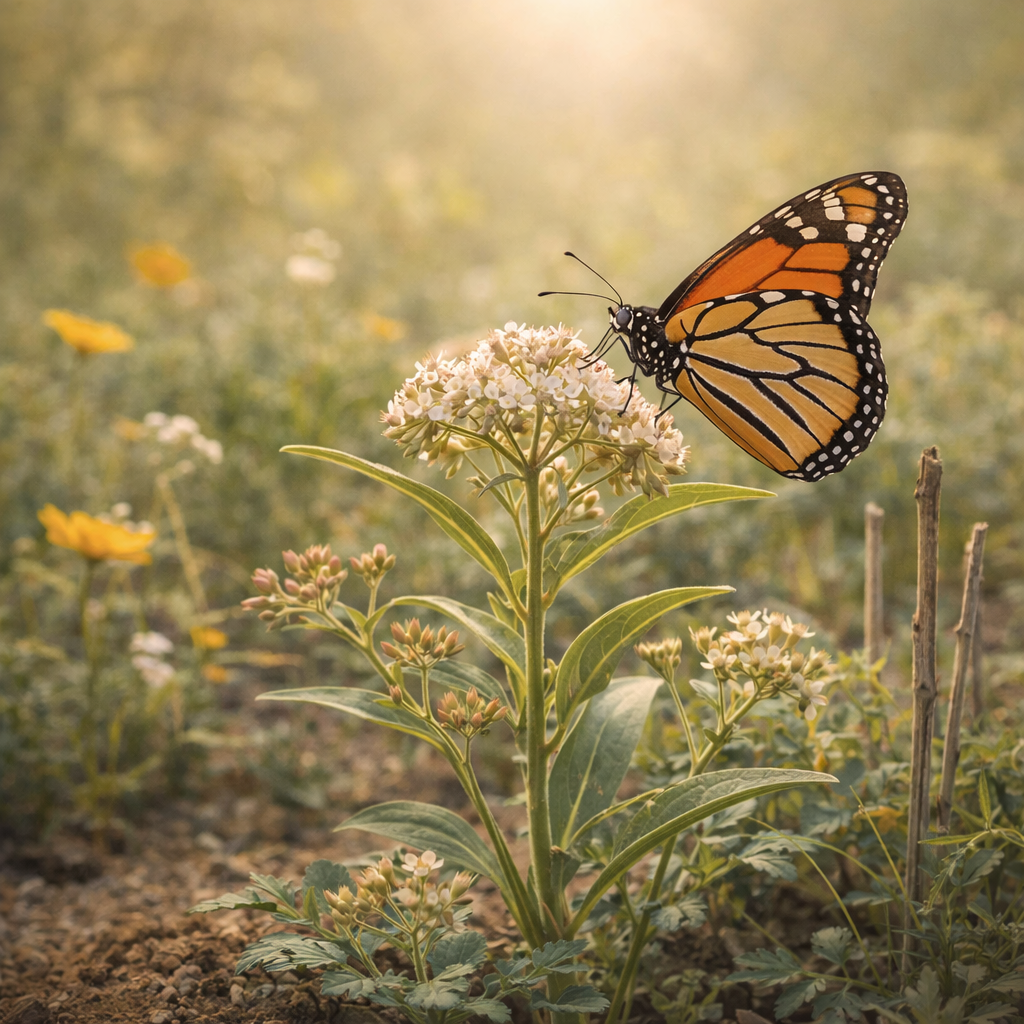
March Pollinator: Western Monarch Butterfly
The Western monarch butterfly relies on diverse native habitat to complete its life cycle.
While milkweed is the monarch’s host plant, adult butterflies depend on a wide range of nectar plants throughout the season. Narrowleaf milkweed is especially valuable in Southern California because it supports monarch caterpillars while integrating well into drought-tolerant landscapes.
Leaving last year’s stems in place until spring also supports stem-nesting native bees that pollinate surrounding plants.
There are many blog posts about the monarch butterfly on our website. You’re invited to learn, change, and grow with us.
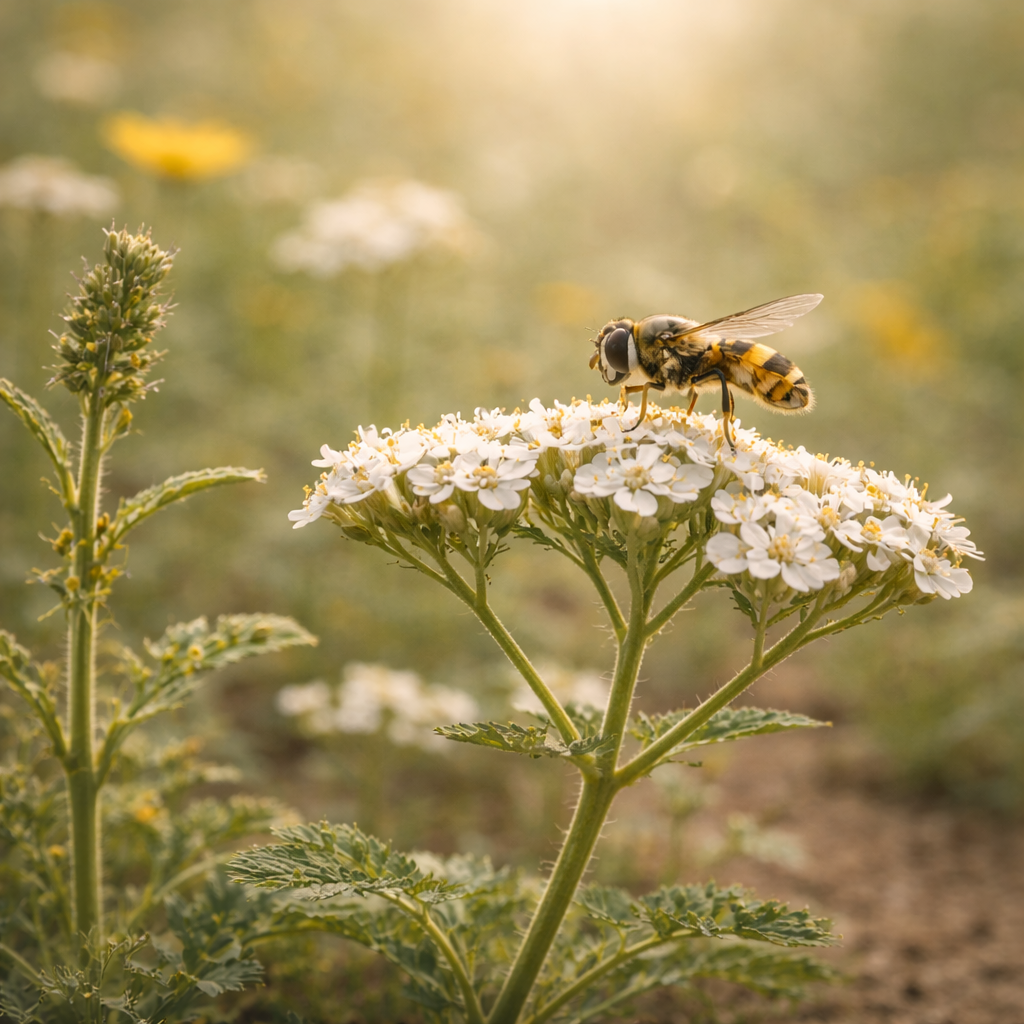
April Pollinator: Common Hoverfly
Hoverflies are often mistaken for small bees, but they are actually beneficial flies that play two critical roles in the garden.
Adult hoverflies pollinate flowers, while their larvae feed on aphids and other plant pests. Native plants like yarrow provide nectar and habitat while requiring very little irrigation.
These quiet pollinators help stabilize healthy ecosystems alongside bees and butterflies.
Special Screening: Kiss the Ground
This Fallbrook pollinator event will include a licensed community screening of the documentary
Kiss the Ground, narrated by Woody Harrelson.
The film explores how regenerative soil practices improve water retention, support biodiversity, and strengthen ecosystems. For Wings of Change, the message connects directly to pollinators: healthy soil grows healthy plants, and healthy plants feed pollinators.
Following the film, attendees will have an opportunity to discuss practical steps for building resilient habitat in Fallbrook and across Southern California.
Reserve Your Seat
This free Fallbrook pollinator event is open to the public, but seating is limited.
Join Wings of Change on April 11 to learn how native plants, soil health, and community action can support pollinators and create resilient landscapes throughout Southern California.
Bring a friend, a neighbor, or someone curious about how small actions can help restore habitat.
Together we are restoring ecosystems — one season, one seed, one gathering at a time.
Learn · Grow · Change
Join us for the Wings of Change Spring Pollinator Celebration in Fallbrook. Native plants, seeds, education, and community partners all in one place.
Discover more from Wings of Change
Subscribe to get the latest posts sent to your email.